Smart Bulbs vs Smart Switches: Which Should You Buy?
It's the first real decision in every smart lighting project: replace the bulbs, or replace the switch? Both make your lights smart. They solve different problems, fail in different ways, and cost very different amounts over a whole house. Here's the honest comparison — including the answer most homes eventually land on.
How They Work (and Why It Matters)
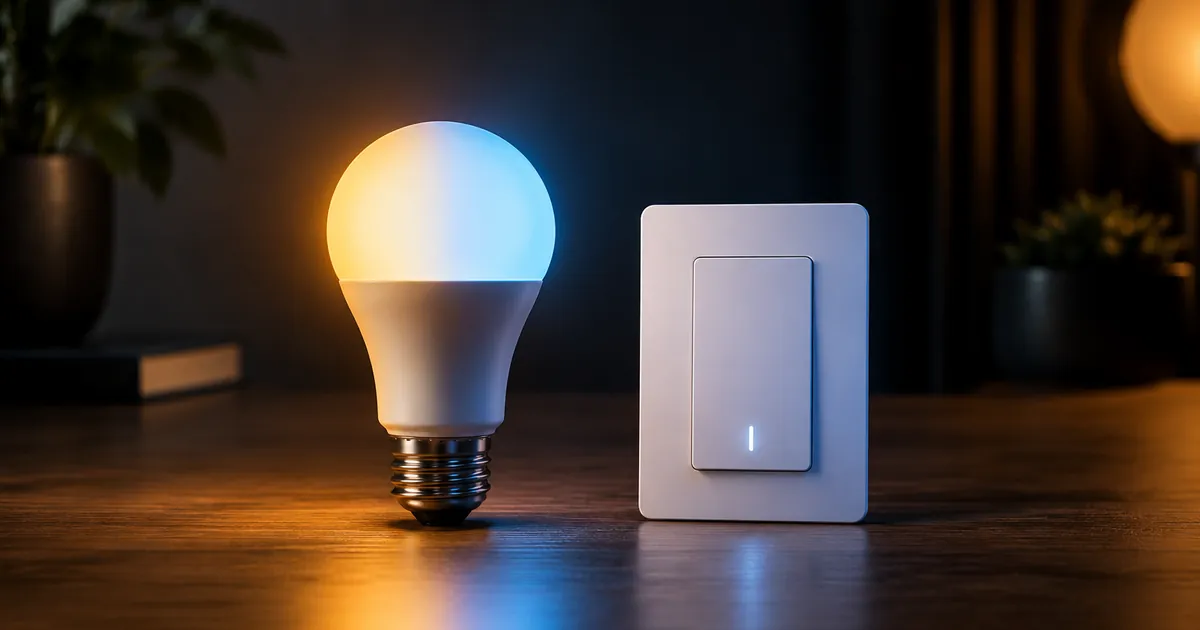
A smart bulb is self-contained: the radio, dimmer, and color engine live inside the bulb. A smart switch replaces the wall plate and controls whatever bulbs are wired behind it — smart or not. That difference drives everything else.
Cost: Bulbs Win Small, Switches Win Big
Per fixture, bulbs are cheaper to start: a 800-lumen color-changing bulb is $35 or less, and a dimmable white bulb is $17. But a room with six recessed lights means six bulbs. A single switch controls all six for one price. The crossover: one or two lamps favor bulbs; rooms with multiple fixtures on one switch favor switches.
Installation: Bulbs Win Decisively
Screwing in a bulb takes 30 seconds and zero risk. A switch involves your home's wiring — kill the breaker, match the wires, and know whether you have a neutral wire (older homes often don't, which rules out many switches). Renters should almost always start with bulbs; the strip lights and bulbs all leave with you when you move.
Flexibility: Bulbs Do Things Switches Can't
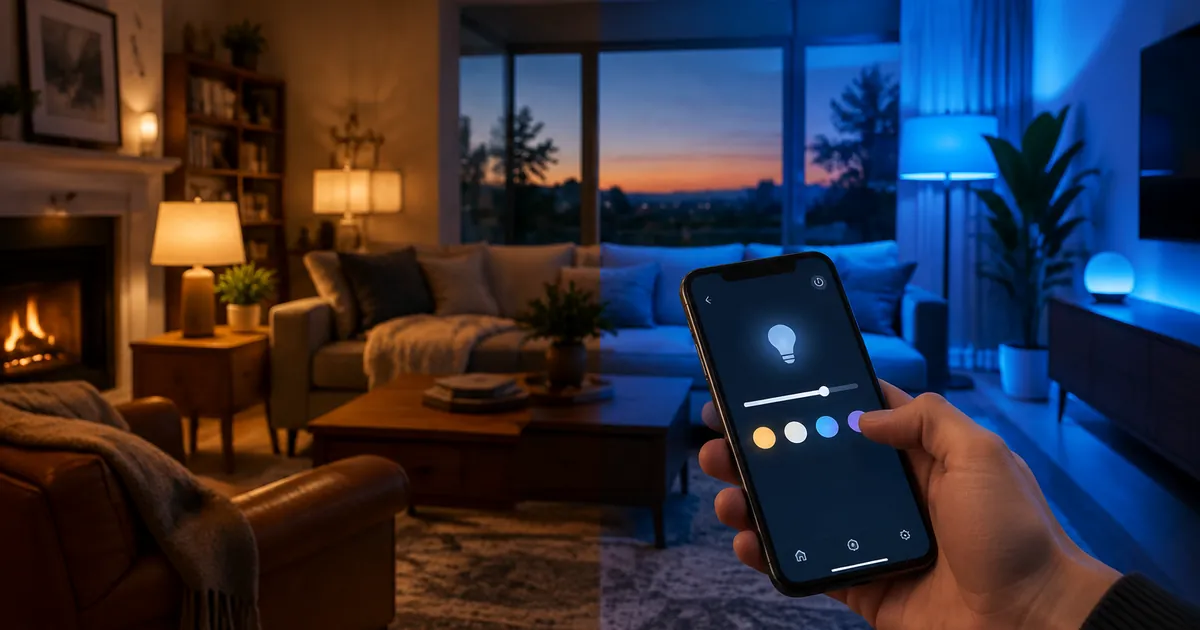
- Color: 16 million colors, warm-to-cool white tuning, movie-night scenes. Switches only turn power on and off — the bulbs behind them stay whatever color they are.
- Per-fixture control: dim the lamp on the left, brighten the one on the right. Switches control the whole circuit.
- Portability: bulbs move house with you.
Reliability: Switches Win the Long Game
The classic smart bulb failure isn't the bulb — it's someone flipping the wall switch to "off" and disconnecting the bulb from Wi-Fi. Switches don't have this problem; the wall always works, and the smart layer rides on top. Bulbs also have a finite lifespan (they're LEDs, so years, but not forever), while a good switch lasts decades.
The hybrid answer most homes land on
Use bulbs where color and per-fixture control matter — lamps, bedrooms, media rooms — and switches for high-traffic overhead circuits — kitchens, hallways, bathrooms. A 4-bulb starter kit in the living room plus a switch for the kitchen overheads is the textbook setup.
Quick Decision Guide
- Renting? Bulbs, no question.
- One or two lamps? Bulbs — start with the 60W-equivalent color bulb.
- Whole room of recessed lights? A switch (or a starter kit if you want color there too).
- Want the RGBIC effects for movies and gaming? Strip lights — a different category entirely, and the most fun per dollar.
The Guest Factor (Underrated Consideration)
Smart bulbs fail gracefully for guests in one way switches don't: a guest who can't find the app can still flip the wall switch, and the bulb simply comes on white at full brightness. Annoying but recoverable. The deeper issue is household adoption — if family members never adopt the app, smart bulbs degrade into expensive regular bulbs. Switches, by contrast, work for everyone by reflex. This is why high-traffic family rooms often end up on switches while personal spaces (bedrooms, offices) keep bulbs with their color and scene features.
Planning a whole-home rollout
If the end goal is a fully automated house, phase it: Phase 1 — bulbs in lamps and bedrooms (the fun, cheap wins). Phase 2 — a starter kit for the main living room's color and scenes. Phase 3 — switches for kitchen and hallway circuits where reflex control matters. Spreading the cost across months also spreads the learning, and by Phase 3 you'll know exactly which rooms need what.
Frequently Asked Questions
Can I mix smart bulbs and regular bulbs on one switch?
Yes, but the regular bulbs only get on/off — no dimming or color. Keep regular bulbs on circuits you rarely automate.
Do smart bulbs work with the wall switch off?
No — the switch cuts their power. That's why high-traffic rooms often end up with smart switches instead.
Which smart bulb is brightest?
For task lighting, look at lumens: our 800-lumen bulb matches a traditional 60W bulb at full brightness.
The Verdict
Start with bulbs — they're cheap, reversible, and teach you what your household actually wants from smart lighting. Move to switches when you know which high-traffic circuits need reflex-friendly control. Most homes end up hybrid, and that's not a compromise; it's the correct design.
Compare the full range in the smart bulbs collection — every listing shows lumens, color range, and compatibility.